
SDD: The Agentic Future of Software Engineering and AI-First Development
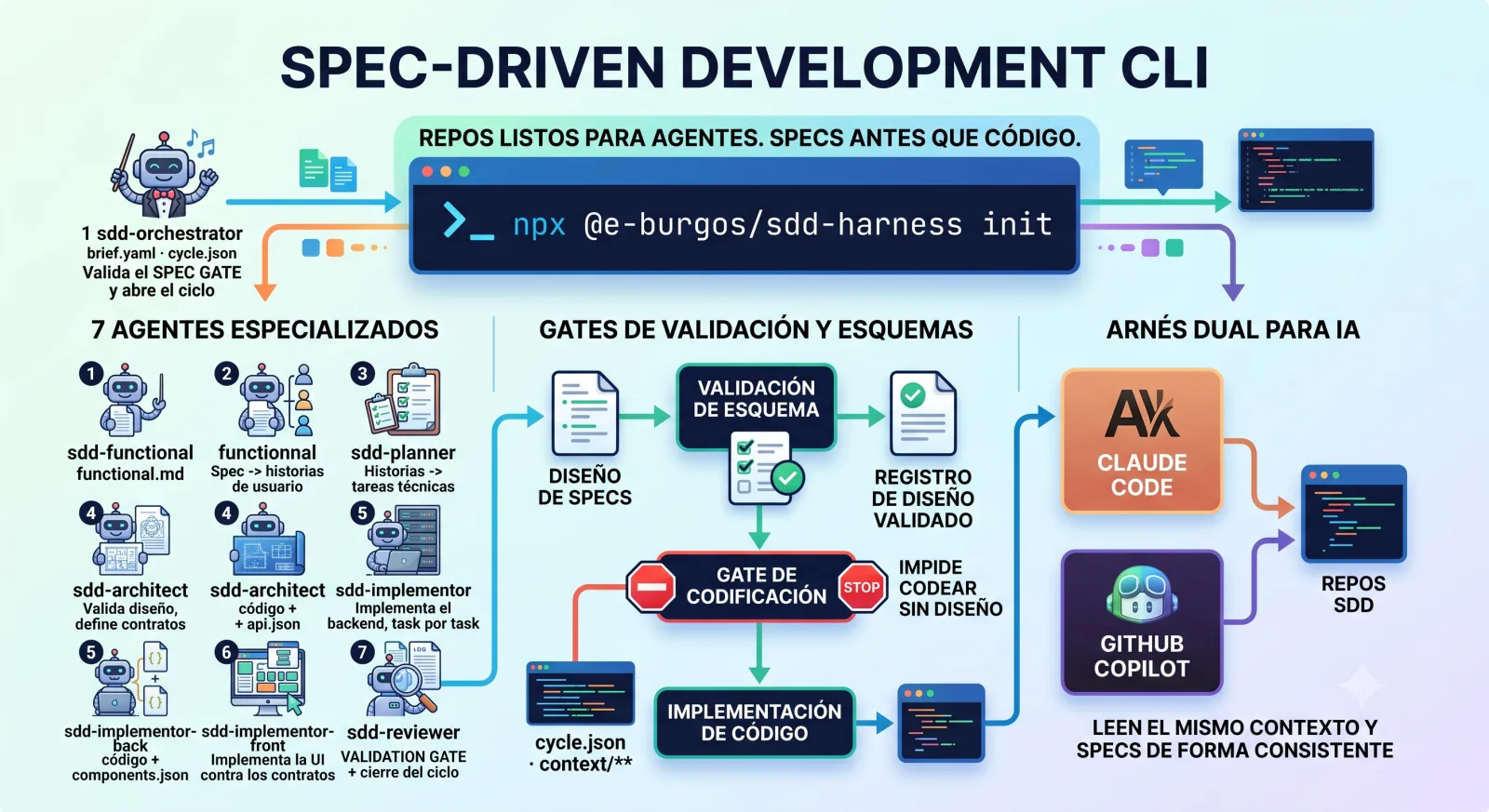
SDD: The Agentic Future of Software Engineering and AI-First Development
In a rapidly evolving technological environment, where artificial intelligence revolutionizes how we create products, writing code in the traditional way is no longer enough. The real challenge today is not generating lines of code at high speed, but rather ensuring that this code is accurate, maintainable, auditable, and 100% aligned with business objectives.
To address this pressing need, Spec-Driven Development (SDD), the AI-First development product and methodology, is born. SDD is designed to transform product vision into functional code with maximum precision and efficiency, marking a before and after in how we approach software engineering.
What is Spec-Driven Development (SDD)?
Spec-Driven Development (SDD) proposes a fundamental paradigm shift in software construction: every feature, architecture, or module begins as a structured specification before the first line of code is written.
Unlike uncontrolled delegation of code generation to AI, SDD uses a sophisticated architecture based on:
- Orchestrated AI agent pipelines: Different agents work together to solve complex tasks.
- Automated evaluation systems: Continuous validation to ensure quality and compliance.
- Multi-agent workflows: Coordination among agents to achieve robust results.
Under this powerful architecture:
- Humans lead with vision and constraints: Define the intent, overall architecture, business requirements, and domain rules.
- AI agents execute and verify: They take the specification, design and implement the solution, run tests, and rigorously validate compliance with each criterion.
Key Utilities and Benefits of SDD
SDD is not just a methodology; it's a competitive advantage that offers tangible benefits:
1. Elimination of Ambiguity in Development
Most software failures, technical debt, and delays stem from imprecise or misinterpreted specifications. With SDD, the specification is the Single Source of Truth, ensuring that what is planned is exactly what is built.
2. Advanced Multi-Agent AI Orchestration
Leverage agentic workflows where different specialized agents assume specific roles (architecture, implementation, code review, testing, and documentation). This intelligent collaboration leads to robust, scalable, and production-ready results.
3. Auditable, Maintainable, and Explainable Code
Guided by clear specifications and continuous evaluations (evaluation harnesses), every change and module in the system is traceable, documented, and easy to maintain over time. This translates into a drastic reduction in technical debt.
4. Accelerated Time-to-Market
By automating the implementation and validation phase using AI agents guided by strict rules, development cycles are drastically reduced without sacrificing quality or security. Deliver products faster, with greater confidence.
Who is SDD for?
Spec-Driven Development is designed for those seeking to lead the future of software engineering:
- Engineering Teams and Tech Leads: Who seek to scale software production without losing architectural control and quality.
- Startups and Enterprises: That need to transform complex ideas into functional, scalable, and auditable digital products in record time.
- AI-First Developers: Who want to evolve from manual programming to orchestrating high-impact agentic systems.
Conclusion
The future of engineering is not about competing against AI, but about directing it. With Spec-Driven Development (SDD), human intentionality and the agentic power of artificial intelligence unite to create smarter, faster, and more reliable software.
Discover the platform and learn more about this revolutionary methodology at:
Comments
Be the first to comment.